you are not separate from this: building something I didn’t know how to make
Jillisa Hope Milner
Wings Open Studio
wingsopen.com
On March 22, I texted a friend who’s built mobiles and asked: “Am I insane to believe I can create a large mobile for this nonprofit in Norfolk, installed and ready for grand opening by April 25?”
He replied, “April 25 of what year?”
The Birth of a Wholly Unreasonable Idea
Late last year, when Kindra Greene, the Executive Director of the Elizabeth River Trail, asked if I would create a piece for their new trailside headquarters, I said absolutely. And I had a plan. A lovely, framed cyanotype they could hang on the wall. I’d treat fabric with cyanotype chemicals, place objects over it, let it expose in the sun, rinse it in the Elizabeth River, and voilà: custom 2D art for this awesome nonprofit through a process I’d done dozens of times before.
Then on March 22, I walked into their space and knew the original plan was dead. High ceilings. Open air. Movement waiting to happen.
“I think you need a mobile right there,” I said. Kindra said yes, and my new obsession was launched.
There was just one problem: I had never made one.
So yes, my mobile-making friend had a point. It was a bit unreasonable to think I could make a 10-foot by 10-foot mobile in less than a month. My first mobile. I wanted to make it with fabric but I didn’t know how to sew. I thought maybe wire would be involved, but I didn’t know a wire gauge from a garden hose. The internet suggested attaching pieces with a swivel, but I didn’t know what a swivel was.
So I did what any inspired and unreasonably optimistic artist would do: I started anyway.
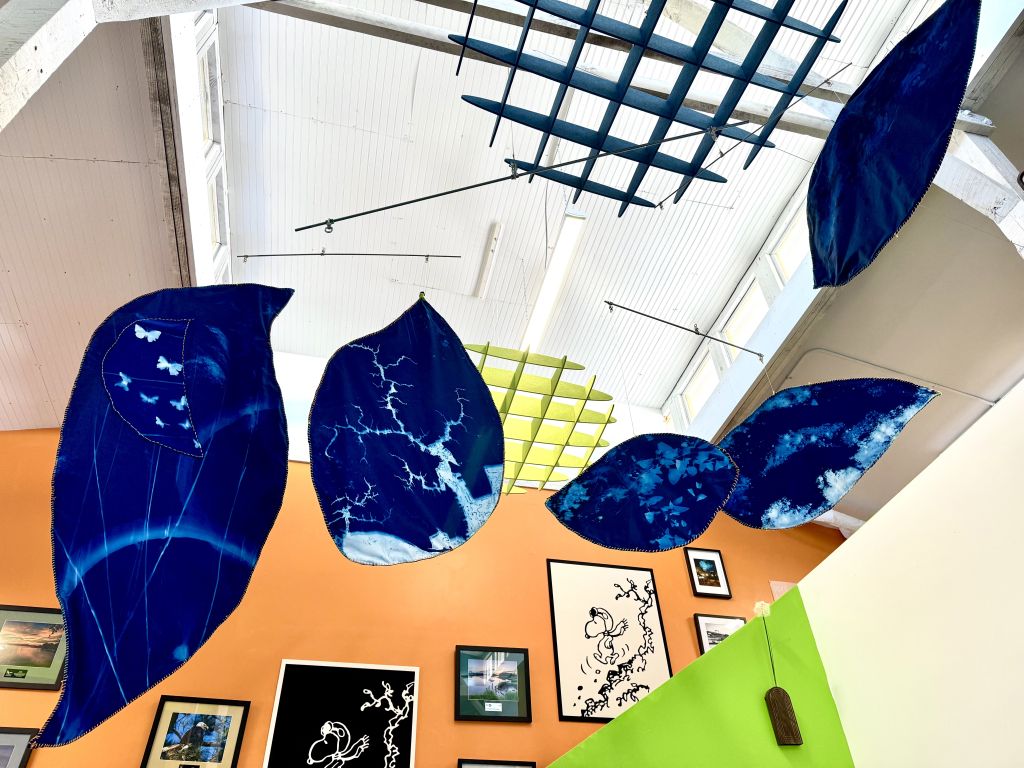
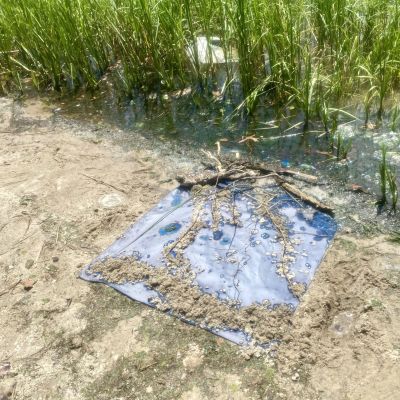
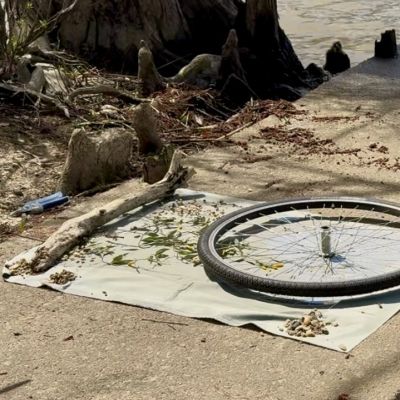
I began at the river, making cyanotypes with sunlight and water. My husband scavenged bike parts from a local bike shop so I could use wheels and gears to cast shadows. I gathered native plants. I let the river and sand and feathers become part of the process.
And I learned everything else as I went.
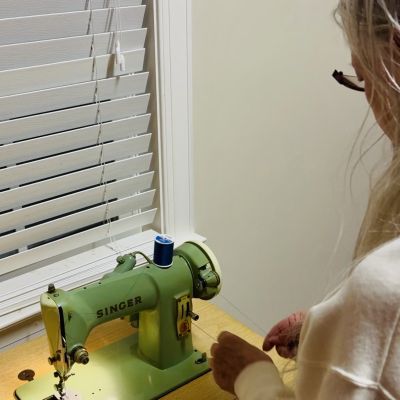
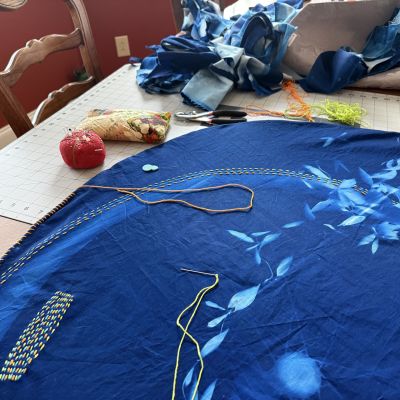
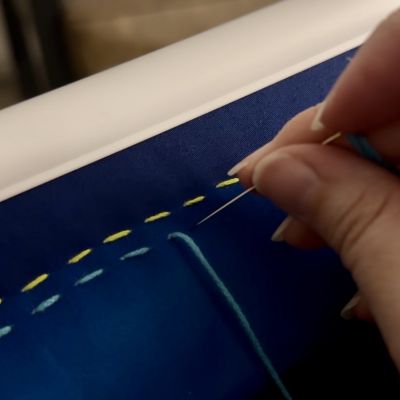
My mom taught me to sew on my great grandmother’s sewing machine. My brother paced the aisles of Ace Hardware with me while we figured out rods, bolts, wire, and yes, swivels. My hairdresser texted me advice so I felt brave enough to use my dad’s hacksaw to cut through steel rods.
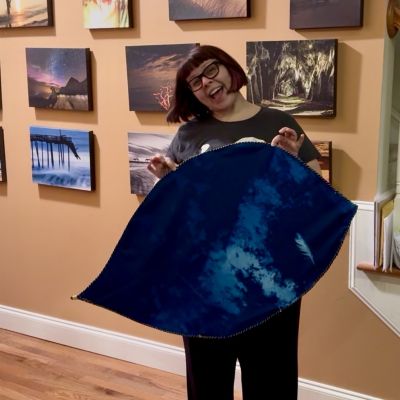
I stitched for hours. Hundreds of stitches around every edge of these large organic shapes. Slow, repetitive, steady work. The kind that asks you to pay attention. At some point, it stopped feeling like construction and started feeling like mindfulness. Just needle through fabric. Thread pulling tight. Breath. Hands. Repeat.
There was also the part where I became completely convinced the whole thing was impossible. The mental crash came right on schedule. I was sprawled out on the floor, stretching fabric and pushing wire as I tried to form this wonky shape I’d imagined. I was surrounded by piles of blue fabric, I had embroidery thread tangled in my hair, I had no idea how the pieces would work together in three dimensions, and I still didn’t really understand the physics of it all. I’m an artist, not an engineer!
I had a week to figure it out.
So I went back to work. Small solution after small solution. Tiny breakthroughs. The slow return of belief. One piece shaped and sewn. Two pieces hanging from a steel rod, perched on a ladder in my parents’ living room at 2:13 am.
I’d finally found balance. It felt like a miracle.
I added a third shape and found the balance point again. Adjusted. Readjusted. Watched how the forms moved through the air and found the exact points where everything could stay in motion without falling apart.
And suddenly, somehow, it worked.
What the Mobile Holds
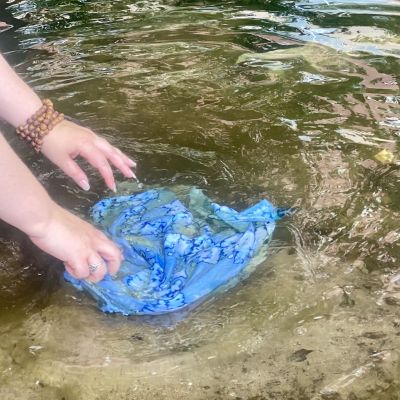
This mobile carries the shapes of native plants, bicycle wheels, sand shadows, and butterflies. The fabric was printed on the banks of the Elizabeth River and rinsed in its waters. It holds movement, place, experimentation, frustration, persistence, and a whole lot of help from other people.
Which feels fitting for the Elizabeth River Trail itself.
The Trail connects neighborhoods, histories, ecosystems, and people across the city. It reminds us that movement can create connection. That public spaces matter. That nature and community are not separate things.
This piece came together the same way. Not alone. Not perfectly. But through attention, support, curiosity, and the willingness to begin before I knew exactly how.
If you find yourself in the new Elizabeth River Trail headquarters, pause for a moment. Look up. Notice what’s moving. The shifting shadows. The slow turning forms. The way one small movement changes everything around it. Because that’s the truth underneath all of this.
None of us are making anything alone. Not art. Not community. Not belonging.
The river shaped this piece. Other people shaped this piece. Curiosity shaped it. Frustration shaped it. So did late-night problem solving, bike wheels, sand, generosity, steel rods, sewing lessons, Kindra’s trust, and the willingness to begin before I knew what I was doing.
The Elizabeth River Trail exists because people keep choosing connection over separation. Care over disconnection. Participation over standing still.
This mobile is really about that.
You are not separate from the natural world. You are not separate from your community. You are not separate from the things you make, repair, protect, or love.
You are not separate from any of this.